
Are court marriage and Nikkah the same thing? Many couples in Pakistan assume they are — and that assumption can create serious legal complications later. Understanding the difference between the two is not just a technicality: it affects your inheritance rights, your children’s legal status, your ability to obtain a passport or visa, and your rights upon divorce.
🕌 What is a Nikkah?
A Nikkah is a religious marriage contract performed according to Islamic law. For a Nikkah to be valid under Islamic jurisprudence, it requires:
- Offer (Ijab) and acceptance (Qubool) by both parties
- At least two adult Muslim witnesses
- Agreement on Mehr (dower), which is a mandatory gift from the husband to the wife
- The presence of a Nikah Registrar (Nikah Khwan) who completes and signs the Nikkah Nama
A Nikkah performed with all these elements is Islamically valid. However, Islamic validity and legal registration under Pakistani civil law are two different things.
📋 What is Civil Registration (Court Marriage)?
Civil or court registration refers to the formal recording of a marriage with the state. In Pakistan, this is done through the Union Council of the area where the marriage takes place. Under the Muslim Family Laws Ordinance, 1961, every marriage must be registered with the Union Council. The Nikah Registrar who performs the Nikkah is also responsible for submitting the Nikkah Nama to the Union Council for official registration.
The term “court marriage” is often used loosely in Pakistan — it typically refers to a marriage that is registered through official channels, often in circumstances where the couple seeks legal protection (for instance, when families are not in agreement). In such cases, the marriage may be solemnised and registered with the assistance of a lawyer and witnessed before a court official.
⚠️ Where Does the Confusion Come From?
Many couples perform a Nikkah ceremony but do not ensure the Nikkah Nama is properly filled out, signed by the correct parties, and submitted to the Union Council for registration. They assume the religious ceremony is sufficient. The law, however, requires more than the ceremony alone.
An unregistered marriage creates the following risks:
- NADRA record: NADRA will not record your marriage in its family records. This affects your CNIC, B-Forms for children, and Family Certificate.
- Inheritance issues: An unregistered wife often struggles to prove her legal status in inheritance proceedings.
- Visa and travel: Most embassies require proof of registered marriage. Most embassies do not accept an unregistered Nikkah.
- Divorce proceedings: If you did not register the marriage, divorce proceedings become procedurally complicated.
- Children’s documents: A child’s birth certificate and B-Form are linked to the parents’ registered marriage.
✅ What Makes a Marriage Both Valid and Registered?
For your marriage to be both Islamically sound and legally recognised in Pakistan, the following must be completed:
- Nikkah ceremony — performed according to Islamic requirements with proper witnesses and Mehr
- Nikkah Nama properly filled out — all sections completed and signed by bride, groom, witnesses, and Nikah Registrar
- Union Council registration — you must submit the signed Nikkah Nama to the local Union Council for registration
- Obtain a certified copy — keep a certified copy of the registered Nikkah Nama for your records
- NADRA update — update your marital status with NADRA and obtain a Family Certificate
🔍 How to Check if Your Nikkah is Registered
You can check the registration status of your Nikkah by contacting the Union Council of the area where your marriage was performed, or by checking with NADRA. If your Nikkah Nama has a registration number and stamp, the Union Council has registered it. If it only has signatures and no official registration seal, you may need to register it still.
If your marriage was performed years ago and you are unsure, consult an advocate who can help you verify and — if needed — register the marriage retrospectively through the appropriate legal channels.
📌 Practical Tips
- Before the Nikkah, confirm that your Nikah Registrar will submit the Nikkah Nama to the Union Council.
- After the Nikkah, follow up with the Union Council to confirm registration and obtain your registration certificate.
- Keep certified copies of your Nikkah Nama in a safe location — not with the husband’s family only.
- Update your CNIC status with NADRA after marriage to reflect your new marital status.
📞 Need Legal Assistance?
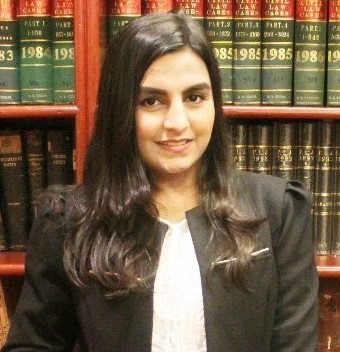
If you have questions about the registration status of your marriage, or if you need help navigating the legal process, HSJ Legal is here to help. Advocate Hina Saleem Jessani is a practicing High Court Advocate in Karachi specialising in family law matters across Pakistan.
Reach out for a consultation: https://hsjlegal.co/contact/
⚖️ Need Legal Advice on This Matter?
Book a consultation with Advocate Hina Saleem Jessani — High Court Advocate, Karachi.
Get expert legal guidance tailored to your specific situation.