Understanding Your Rights in a Marriage Under Pakistani Law

Marriage in Pakistan is governed by Islamic principles, the Muslim Family Laws Ordinance, 1961, and other relevant laws. Both spouses have legal rights and responsibilities that protect their interests. Understanding these rights is essential for a fair and just relationship.


πŸ”Ή 1. Right to Nikahnama (Marriage Contract) & Conditions

The Nikahnama (marriage contract) is a legally binding document that outlines both spouses’ rights and responsibilities.
βœ… The bride has the right to negotiate conditions (e.g., education, employment, residence).
βœ… The right to include a clause for Talaq (divorce) delegation (Talaq-e-Tafweez).
βœ… Dower (Haq Mehr) is the mandatory financial gift from the groom to the bride.

πŸ’‘ Tip: Read and fill out all sections of the Nikahnama carefully before signing!


πŸ”Ή 2. Right to Financial Support (Nafaqa)

Under Islamic law and Pakistani law, a husband is obligated to financially support his wife (Nafaqa). This includes:
βœ… Food, clothing, medical care, and shelter.
βœ… Even if the wife is financially independent, the husband must provide Nafaqa.
βœ… If the husband fails to fulfill this duty, the wife can file a legal claim in court.


πŸ”Ή 3. Right to Inheritance

Women have a legal right to inheritance under Islamic law and the West Pakistan Muslim Personal Law (Shariat) Act, 1962.
βœ… A wife inherits 1/8th of her husband’s property if they have children.
βœ… If there are no children, she inherits 1/4th.
βœ… Daughters also have a fixed share in their parents’ inheritance.

πŸ’‘ Tip: If a woman is denied inheritance, she can file a claim under Section 498-A of the Pakistan Penal Code (PPC).


πŸ”Ή 4. Right to Divorce (Talaq & Khula)

Under Pakistani law, both spouses can seek divorce:
βœ… Talaq (by Husband): A husband can divorce his wife but must send a written notice to the Union Council, which will issue a Talaq certificate after 90 days.
βœ… Khula (by Wife): A wife can seek divorce through Family Court if she has valid grounds (e.g., cruelty, neglect, desertion).
βœ… Mubarat (Mutual Divorce): Both spouses can mutually agree to end the marriage.

πŸ’‘ Tip: A woman can seek delegated divorce (Talaq-e-Tafweez) if it is mentioned in the Nikahnama.


πŸ”Ή 5. Right to Child Custody (Hizanat & Guardianship)

In case of divorce, custody of minor children is decided under the Guardian and Wards Act, 1890.
βœ… Mothers usually get custody (Hizanat) of young children.
βœ… Fathers retain guardianship and are responsible for financial support.
βœ… Courts consider the child’s welfare before granting custody.

πŸ’‘ Tip: The father must continue financial support even if the mother has custody.


πŸ”Ή 6. Protection Against Domestic Violence

Under the Pakistan Penal Code (PPC) & Domestic Violence Laws, women have legal protection against abuse:
βœ… Physical, emotional, or financial abuse is punishable.
βœ… Women can file a case under Section 354 & 509 of the PPC for harassment.
βœ… Provinces like Punjab and Sindh have specific Domestic Violence Acts.

πŸ’‘ Tip: A woman facing domestic violence can seek a Protection Order from the court.


πŸ”Ή 7. Right to Work & Education

Women in Pakistan have the legal right to:
βœ… Pursue education and employment (unless restricted by a Nikahnama clause).
βœ… Own and manage property in their name.
βœ… Refuse forced marriage under Section 498-B of the PPC.

πŸ’‘ Tip: Forced marriages are punishable by up to 10 years imprisonment under Pakistani law.


πŸ”Ή 8. Right to Medical & Legal Decisions

βœ… A spouse can make medical decisions for the other in emergencies.
βœ… A woman can seek independent medical treatment.
βœ… A husband cannot force his wife into medical procedures (e.g., abortion).


πŸ“Œ Final Thoughts

Understanding your rights in marriage helps you protect yourself legally. If you face any violation of these rights, you can seek legal help through Family Courts.

Need Legal Advice on Marriage & Family Law in Pakistan?

For expert legal assistance regarding Nikahnama, divorce, custody, or inheritance, feel free to contact me.

Related Posts

Hina Saleem Jessani

ADVOCATE HIGH COURT

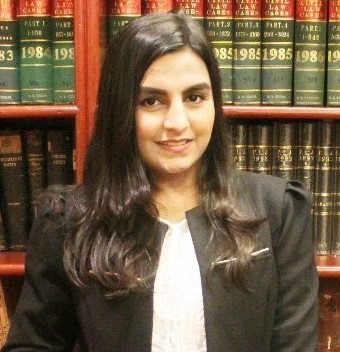
I’m Hina Saleem Jessani, an Advocate of the High Court, dedicated to providing legal insights, practical legal solutions, and thought-provoking book reviews. With a passion for both law and literature, my mission is to simplify complex legal concepts and share knowledge that helps individuals, businesses, and legal professionals navigate the legal landscape with confidence.

Hina Jessani

Featured Posts
Explore