
“Meri Haq Mehr toh sirf formality hai” — this is one of the most common (and costly) misconceptions among Pakistani brides. Haq Mehr is not a symbolic gesture. It is a binding legal right, enforceable in court, and every woman entering a Nikkah should understand exactly what she is entitled to and how to protect that right.
⚖️ What is Haq Mehr Under Pakistani Law?
Haq Mehr (dower) is a mandatory payment — money, property, or any agreed asset — that a husband owes his wife as a condition of a valid Nikkah under Islamic law, recognised and enforced by Pakistani civil courts through the Muslim Family Laws Ordinance, 1961 and the Family Courts Act, 1964. It belongs solely to the wife. It is not a gift to the family, not shared with in-laws, and not conditional on the marriage lasting.
📋 Prompt (Muajjal) vs Deferred (Muwajjal) Mehr
- Prompt Mehr: Payable immediately on demand, even during a subsisting marriage.
- Deferred Mehr: Payable on dissolution of marriage — through divorce, Khula, or death of the husband.
The Nikkah Nama (columns 13–17) legally records the amount and type of Mehr. If the columns are left blank or vague, disputes over the exact amount become far harder to prove in court — so every bride should insist on clear, specific entries at the time of Nikkah.
🏠 Can Haq Mehr Include Property?
Yes. Mehr is not limited to cash. It can be agreed as:
- A fixed cash amount
- Gold or jewellery
- Immovable property (a house, plot, or land)
- Any other asset of agreed value
✅ Practical example: If a Nikkah Nama records Mehr as “Rs. 20 lac or a residential plot in Karachi, whichever the wife chooses,” the wife has the legal right to elect either option — the husband cannot unilaterally substitute one for the other.
📝 How to Recover Unpaid Haq Mehr
- Send a legal notice to the husband demanding payment of the outstanding Mehr.
- If unpaid, file a Suit for Recovery of Dower before the Family Court under the Family Courts Act, 1964.
- Attach the Nikkah Nama as primary evidence of the agreed amount.
- The Family Court can pass a decree for recovery, which is executable against the husband’s assets.
Importantly, a wife does not lose her right to Mehr even if she seeks Khula — deferred Mehr remains recoverable unless she has expressly waived it in the Khula proceedings.
💡 Practical Tips
- Never leave the Mehr column in the Nikkah Nama blank — insist on a specific figure or asset description.
- Keep a certified copy of your Nikkah Nama safely; it is your primary evidence.
- If Mehr includes property, ensure the description (address, size, survey number) is precise.
- Do not sign any waiver of Mehr under pressure — consult a lawyer first.
- A limitation period applies to recovery suits, so act promptly once a dispute arises.
Need Legal Assistance?
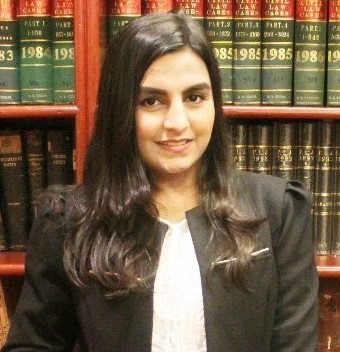
HSJ Legal, led by Advocate Hina Saleem Jessani, High Court Advocate in Karachi, assists women across Pakistan in recovering unpaid Haq Mehr and protecting their rights under the Nikkah Nama. If you need help drafting a Nikkah Nama or recovering your Mehr, get in touch at https://hsjlegal.co/contact/.
⚖️ Need Legal Advice on This Matter?
Book a consultation with Advocate Hina Saleem Jessani — High Court Advocate, Karachi.
Get expert legal guidance tailored to your specific situation.